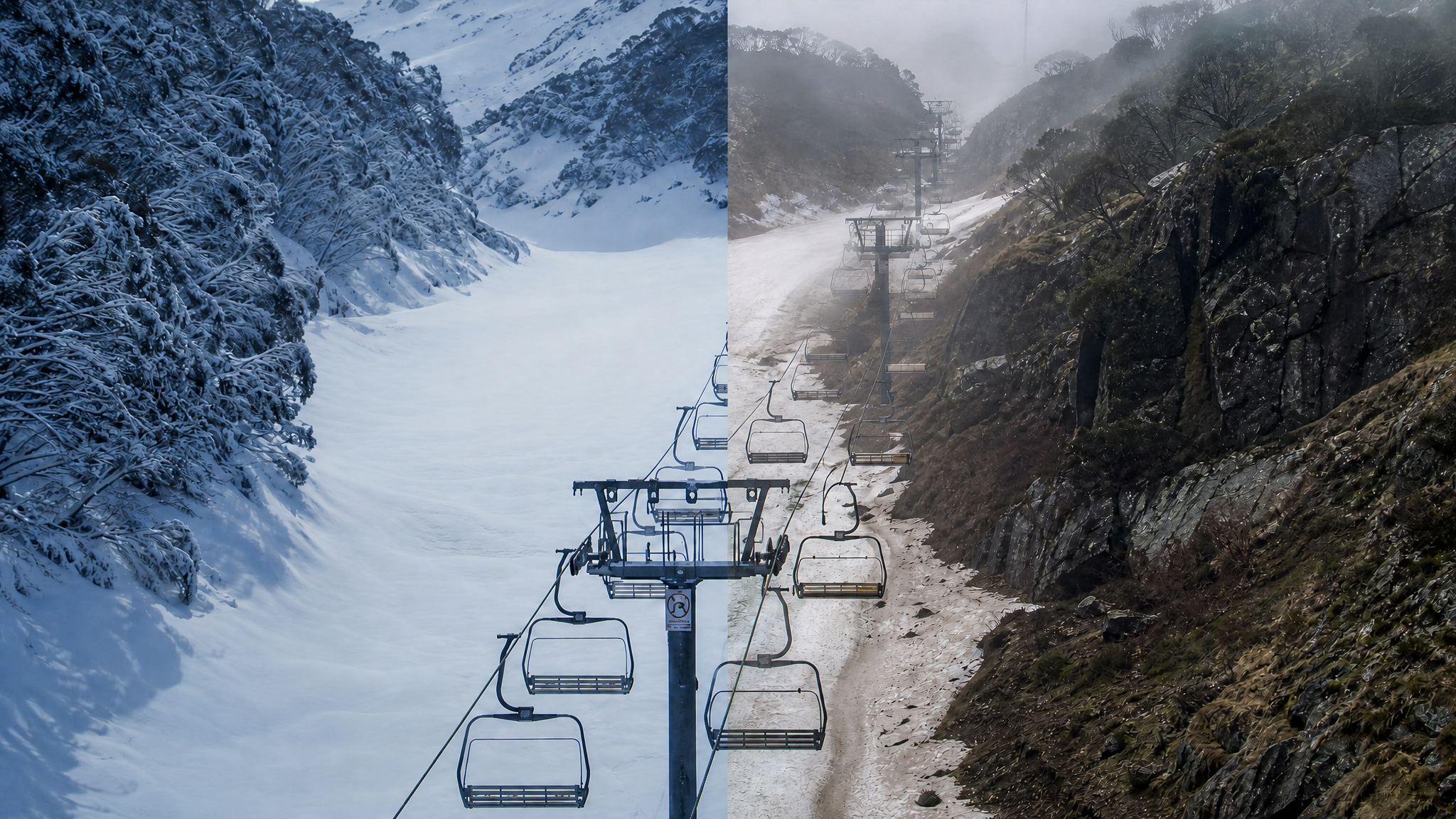
Mount Hotham, Victoria · Snake Gully
A warming world is already reshaping the places we love. Here's what you can actually do about it.
Show me what I can do →📍 ButWhatCanIDo.craiglambie.com
You don't have to be perfect. Every step down this list matters — and the earlier you start, the more it compounds. Pick one thing today.
The actions below are ranked from easy wins to meaningful changes to high-impact commitments.
What you eat is one of the single biggest levers you have. Animal agriculture — especially beef and dairy — drives deforestation, methane emissions, and water use at scale.
Oat, almond, soy — all have a fraction of the emissions. Easy swap in coffee, cereal, cooking.
Saves ~0.5 t CO₂e/yrReplace some beef meals with chicken, pork, or fish. No lifestyle overhaul needed.
Saves ~0.3 t CO₂e/yrA simple habit that adds up. Try "Meat-Free Monday" as a starting point.
Saves ~0.2 t CO₂e/yrPlan meals, freeze leftovers, use your whole veg. ~30% of food produced is wasted.
Saves ~0.3 t CO₂e/yrReplace with chicken, fish, legumes. Beef is ~20× more emissions-intensive than chicken per gram of protein.
Saves ~0.6 t CO₂e/yrCheese is the most emissions-intensive dairy product. Nutritional yeast, cashew cheese, or just less of it.
Saves ~0.3 t CO₂e/yrCut all dairy — milk, cheese, butter, yoghurt. Plant-based alternatives are now genuinely good.
Saves ~0.5 t CO₂e/yrUltra-processed food has a surprisingly high footprint. Cooking from scratch is better for you and the planet.
Saves ~0.2 t CO₂e/yrThe single biggest food-related action most people can take. Beef drives more emissions than all transport combined for many households.
Saves ~1.0 t CO₂e/yrReplace with beans, lentils, tofu, tempeh. Protein is easy to get — and legumes actually fix nitrogen in soil.
Saves ~1.5 t CO₂e/yrA fully plant-based diet is the highest-impact dietary choice. It's more accessible than ever in Australia.
Saves ~1.5–2.0 t CO₂e/yrCars are responsible for around 12% of global CO₂ emissions. In Australia, where distances are long and public transport is patchy, this one takes effort — but the savings are real.
Any trip under 3km — walk it. Under 8km — try cycling. It's faster than you think in traffic.
Saves ~0.2 t CO₂e/yrFewer cold-start trips = fewer emissions. Plan your week and batch your driving.
Saves ~0.1 t CO₂e/yrReplace one car commute per week with train, tram, or bus. Build the habit gradually.
Saves ~0.15 t CO₂e/yrIf you can, ditch the car commute entirely. Combine PT with a folding bike or e-bike for the last mile.
Saves ~1.0 t CO₂e/yrA trial run. You'll discover what's actually possible — and what you genuinely need a car for.
Saves ~0.5 t CO₂e/yrE-bikes replace car trips more effectively than regular bikes. The fastest-growing transport category in Australia for good reason.
Saves ~0.8 t CO₂e/yrHard in many Australian cities, but possible in inner suburbs. Car share + PT + e-bike covers most needs.
Saves ~2.0 t CO₂e/yrIf you need a car, an EV on a green energy plan cuts transport emissions by ~70–80%.
Saves ~1.5 t CO₂e/yrA single return long-haul flight can wipe out an entire year of other savings. Flying is the fastest way to blow your carbon budget — but there are real alternatives.
Australia has extraordinary places most Australians have never seen. The Kimberley, Tassie, the Flinders Ranges — no flight needed.
Saves ~1.5 t CO₂e per avoided flightBusiness class uses 3–4× more space per person = 3–4× the emissions per seat. Economy is the lower-impact choice.
Saves ~2.0 t CO₂e per long-haul tripNot a free pass — but a meaningful supplement. Use Gold Standard or Verra-certified offsets only.
Partial mitigationSydney–Melbourne by train is a genuine option. Europe by rail is often faster city-to-city than flying.
Saves ~0.3 t CO₂e per tripOne 3-week trip emits less than three 1-week trips. Slow travel is lower-carbon travel.
Saves ~1.0 t CO₂e/yrA personal flight budget. Hard if you have family overseas — but a powerful commitment if you can make it.
Saves ~2–4 t CO₂e/yrThe highest-impact holiday decision. Explore by train, ship, or road. A growing movement globally.
Saves ~3–5 t CO₂e/yrYour workplace decisions can have far more leverage than personal choices. One policy change, one supplier swap, one conversation with leadership can move more carbon than years of personal action.
Every day you don't commute is a day of transport emissions saved — for you and your employer's Scope 3.
Saves ~0.3 t CO₂e/yrMost meetings don't need to be in person. Push back on unnecessary travel.
Saves ~1.0 t CO₂e per avoided flightAsk facilities or management. GreenPower accreditation in Australia is straightforward for businesses.
High leverageScope 3 emissions (supply chain) are often 70–90% of a company's total footprint. Push for a supplier audit.
Potentially massiveDraft a simple climate policy for your team or department. Even small internal policies create accountability.
Multiplied impactYour superannuation is likely invested in fossil fuels. Australian Ethical, Future Super, and others offer alternatives.
Saves ~10–20 t CO₂e/yr equivalentThe most impactful career move. Your skills applied to climate solutions multiply your personal impact enormously.
TransformativeIf you have influence over investment decisions, push for full divestment from fossil fuel assets.
Systemic impact
Socials & Community
Norm-shifting powerSocial norms drive behaviour more than information does. When you talk about what you're doing, you give others permission to do the same. Your voice is a tool.
Share what you're doing, not what others should do
"I switched to oat milk and honestly can't tell the difference" lands better than "you should stop drinking dairy."
Norm-shiftingFollow and amplify climate voices
Boost scientists, journalists, and advocates doing good work. Algorithms reward engagement — use that.
AwarenessTalk about it at the dinner table
Research shows family conversations are one of the most effective ways to shift attitudes — especially with older generations.
High personal leverageJoin a local climate group
Climate Conversations, local council sustainability committees, community gardens — collective action compounds.
Community leverageWrite to your local MP
Politicians track constituent contact. A personal letter (not a form email) carries real weight.
Political leverageVote with climate as a priority
Policy change dwarfs individual action. Use your vote — and encourage others to do the same.
SystemicRun for local council or a board
Local government controls planning, transport, and land use. Getting involved directly is high-leverage.
Systemic impactOrganise, don't just participate
Start a conversation series, a community composting scheme, a workplace sustainability group. Leaders multiply impact.
Multiplied impact